
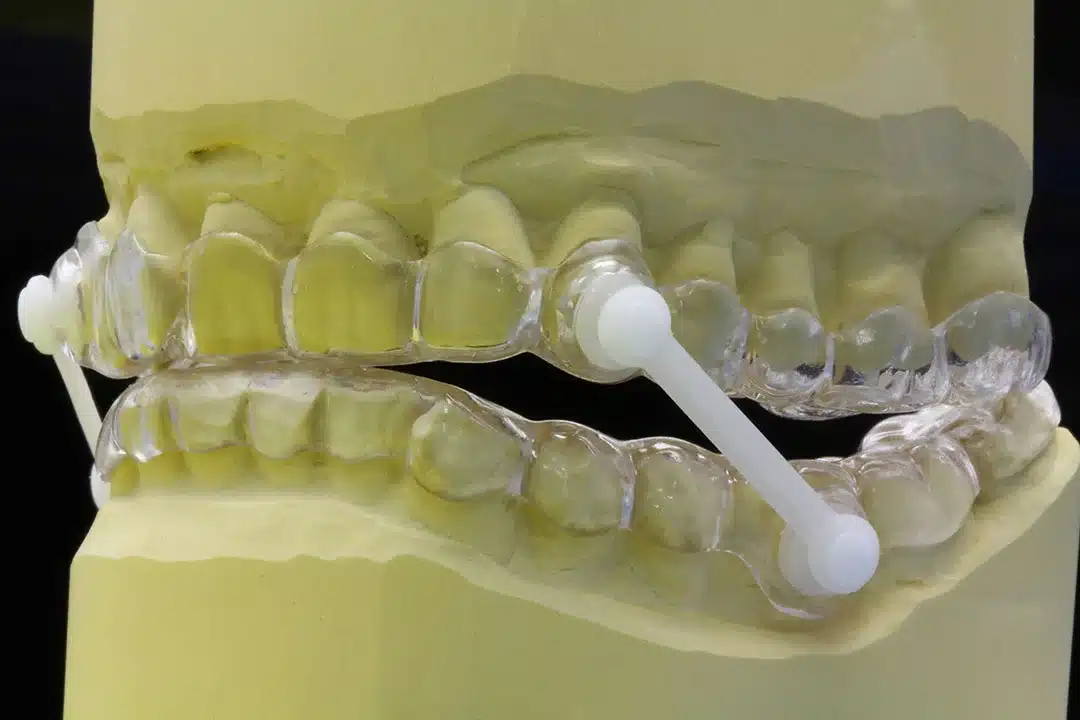
Do you or a family member struggle with snoring? Snoring may seem annoying and harmless; however, snoring can be the sign of something much more serious.
Benefits
- Improves Sleep Quality: Dental devices like mandibular advancement devices can help reduce snoring, leading to a more restful and uninterrupted sleep.
- Reduces Health Risks: By improving airflow during sleep, these devices help mitigate the risk of developing serious health issues associated with sleep apnea.
- Non-Invasive Treatment: Unlike surgery, using a dental device to manage snoring is a non-invasive option that can be easily adjusted or removed.
- Enhances Daytime Functioning: Better sleep quality leads to improved alertness and cognitive function during the day, reducing daytime sleepiness.
- Custom Fit: Dental appliances for snoring are custom-fitted by dentists, ensuring they are comfortable and effective for the individual user.
- Portable and Convenient: These devices are small, making them easy to transport and ideal for use both at home and while traveling.
If you or a loved one snore, it could be a symptom of Obstructive Sleep Apnea (OSA) and may require treatment. OSA can cause a number of very serious conditions, including heart problems, weight gain, diabetes, and high blood pressure.
How can I stop snoring?
A simple and effective way to reduce snoring may be to wear a snore appliance while sleeping. There are several designs of custom appliances available, which are very effective for holding the airway open to reduce snoring and promote good sleep. Be sure to talk with our dental team about the best solution for you!
Snoring, sleep concerns and your dental examination
Snoring has several possible causes, and not every person who snores needs a dental appliance. Tell your dentist about the symptoms you have noticed and whether a partner has observed pauses in your breathing during sleep. Daytime sleepiness, morning headaches or breathing concerns should also be discussed with your medical clinician. A dental consultation does not replace a medical evaluation or a sleep study when one is recommended.
Bring details of any sleep-apnea diagnosis, previous sleep study, prescribed treatment and current medications. If you use CPAP or another device, explain what has and has not worked for you. Your dentist can assess your teeth, gums, bite and jaw comfort to help determine whether a dental appliance is appropriate in coordination with your medical care. An appliance is not a guaranteed solution and is not suitable for everyone.
Questions about an oral appliance
If an appliance is recommended, ask how it is made and adjusted, how to clean and store it, and which follow-up visits are needed. Report jaw discomfort, a change in your bite, loose teeth or persistent symptoms rather than trying to adjust it yourself. Ask how treatment effectiveness will be reviewed with your medical clinician. Do not stop a prescribed sleep treatment without speaking to the clinician responsible for your care.
Before proceeding, ask what the estimate includes: assessment, fitting, adjustments, follow-up and possible repair or replacement. Insurance requirements for a sleep-related appliance may differ from routine dental benefits. Check coverage and any medical documentation requirements rather than assuming your dental plan pays for it. We can discuss dental evaluation and scheduling, while your medical clinician remains the appropriate source for diagnosing sleep disorders.
More about your treatment options
Read Welcome to East Valley Dental Professionals: Your New Patient Dentist in Mesa for background and questions to discuss with your dentist.
Read Why Regular Dental Cleanings Matter for Mesa Families for background and questions to discuss with your dentist.
Read Why Choose a Local Family Dentist Near Dobson Ranch Mesa? for background and questions to discuss with your dentist.